

In this three-part series of articles Sam Lloyd, Executive Director of CRO Corporate Services Limited, outlines the evolution of corporate information service provision during his career, including significant events, personal achievements and the influences that have shaped the industry.
INNOVATION DURING THE 1990S AND BEYOND
In 1990, Companies House opened regional offices in Manchester, Birmingham, and Leeds. In the same year, Tim Berners-Lee defined the web’s basic concepts, including URL, HTTP and HTML, and wrote the first browser and server software.
In 1992, whilst my position at D&D was secure, I felt that the Company was not going in the right direction for me, so I decided to approach the owners of Severnside Company Services to buy back in and set up a London office for the partnership. The idea was to enhance the existing business, which was solely trading in Cardiff, by targeting clients in the lucrative London market.
The owners of Severnside agreed with my proposition, and I then joined the Company as part-owner and Partner.
During these years, I remained fully involved with EACRU and played a key role in rebranding the organisation as the Association of Company Registration Agents Limited (ACRA). In later years, ACRA would go on to serve as a powerful lobbying tool for my business, the broader industry and its partners. My involvement in ACRA was also instrumental in my endeavours to act in the best interests of our clients, who are primarily law librarians, to keep them up to date with the intentions of Companies House and influence their decisions in the interests of the corporate information services industry.
Following the retirement of David Durham as Chairman of ACRA, I was primarily involved in securing the appointments of two further Registrars of Companies, Stephen Curtis and the current Chairman Gareth Jones. In recent years I was instrumental, on behalf of CRO Info, in shaping the current Companies House Service into a fit-for- purpose platform, which replaced Companies House Direct. This was achieved through CRO acting as unofficial consultants to Companies House, providing suggested enhancements and pointing out anomalies to bring the service up to scratch and make it fit for purpose.
In 1995, digital scanners were introduced in Companies House. Also this year, Microsoft introduced its operating system, Windows 95, featuring new functionalities such as the taskbar and Start menu. To install Windows 95, it required 13 floppy disks, but as painstaking as this process was, it revolutionised home computing.
In 1997, Companies House introduced Companies House Direct (CHD), its first online search system. Its website was also launched this year. Aside from the website and CHD, other significant tech developments included IBM’s computer, Deep Blue, beating the human world chess champion Gary Kasparov.
Given the imminent rise of the Internet, we decided to create our first website. The domain ‘www.severnside.co.uk’ was already taken by a large waste management company in Wales, so we decided to register the alternative, but phonetically similar, domain of ‘www.7side.co.uk’. We also started using email, which signalled a new era in digital communication for us, and this would prove to be a central feature in our future communications.
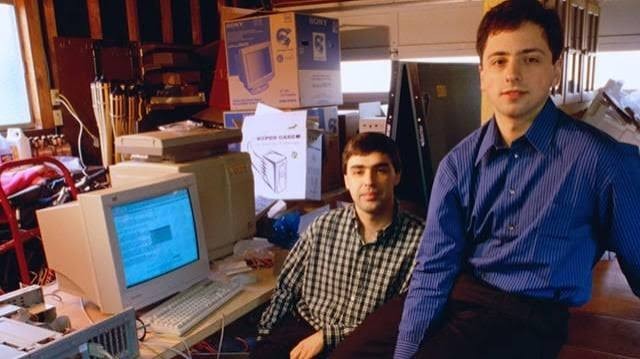
In 1998, Companies House introduced e-filing of directors’ and annual return forms. In the same year, Google was incorporated in America by co-founders Larry Page and Sergey Brin. Their office? A garage in Menlo Park, California, handling 10,000 queries a day.
In 2000, Companies House introduced WebCheck online search provisions aimed at smaller, casual users. The introduction of CHD by Companies House was the game-changer for us, though. This allowed us to capture digital images of documents. We were also one of the first companies to introduce the Companies House extranet service for our clients’ usage. This service enabled our clients to access our CHD account and order individual documents or document packages. We would then invoice each client at the end of the month, saving them the bother of maintaining an account with Companies House. More importantly, as an added value proposition, we were there to address any anomalies and issues that often arose with the CHD system, which saved our clients time and hassle that they would have otherwise incurred by dealing with Companies House directly.
However, all the documents were also available on microfiche, and it was still more cost-effective to copy the documents from the microfiche records and deliver them to clients. As a result, we employed 10 extra staff members, purchased an additional five microfiche reader/ printers, and began to see a significant surge in demand for our corporate information services.
In 2001, the Companies House Web Filing service went live, and electronic incorporations commenced. Also, Apple introduced the iPod. The Walkman generation was amazed at the whopping 1000 songs they could keep in their pocket. Much to our annoyance, given the investment we had made, Companies House stopped updating microfiche in Its rationale was that more than 60% of all live companies had a complete electronic record.
In 2003, Companies House announced that, due to technical advances, it would be closing its regional offices in Manchester, Leeds and Birmingham. Also in 2003, more technical advances were witnessed as the Human Genome Project was completed, successfully sequencing the human genome.
The year 2003 also saw a significant change in our business. The then Managing Director retired, and we converted the business from a trading partnership to a limited company, changing our name to 7side Limited to align with our domain name.
Over the next few years we experienced steady growth in the business, and we took a significant step by introducing worldwide corporate searches to our portfolio. Whilst we had already provided searches in offshore jurisdictions such as Jersey, Guernsey, and the Isle of Man, as well as Ireland and Scotland, the move to provide searches worldwide proved pivotal to the overall success of my businesses to date.
In 2006 the Companies Act 2006 received Royal Assent (and was implemented in October 2009). In the same year, Twitter was launched.
In 2008 the Companies House Information Processing System (CHIPS) was introduced. This system replaced its then-20-year-old electronic processing system, Stem. In the same year, the world’s most powerful particle collider, the Large Hadron Collider, began accelerating particles, enabling scientists to explore fundamental questions about the universe.
Another part of our business was to provide property search services, including personal local authority searches, drainage and water searches, all related to property conveyancing transactions.
The then Labour Government introduced, under the Housing Act 2004, a Home Information Pack (HIP), sometimes referred to as a Seller’s Pack, which was to be provided before a property in England and Wales could be put on the open market for sale with vacant possession. We invested heavily in HIPs as we were certain at the time that it would be a growing and lucrative market in which to participate fully. The whole dream came crashing down when, in May 2010, the incoming Conservative/Liberal Democrat coalition government announced its intention to scrap HIPs with immediate effect.
Not to bang my drum too loudly, but one of the initiatives I am particularly proud of, which made a profound difference for our law firm clients, was creating and introducing Companies Court checks (winding up searches). I managed to make this happen by arranging a meeting with the Manager at the Royal Courts of Justice (RCJ). The only way to search the central index of winding up petitions at the time was to use a premium – rate telephone line or visit the counter at the RCJ to inquire whether there were any pending winding up petitions on corporate entities. This was a laborious and lengthy process as you would either have to telephone the premium rate line, which was often very busy or engaged, or join the queue up at the counter at the RCJ to ask one of the counter staff to carry out the check for you. At the meeting with the Manager of the RCJ, I explained that we already dealt with most of the law firms that would call its overstretched premium rate line and that we could ease the pressure on the RCJ if it provided us with access to the system to carry out the checks. A week later, I received an email from the Manager, who stated that they would provide access via public terminals at the RCJ and that we could access these for an agreed fee.
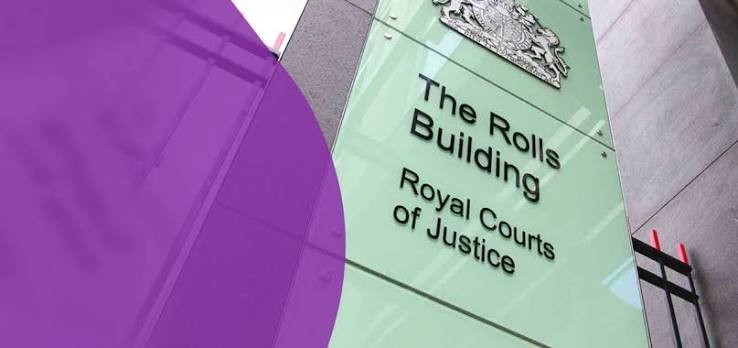
The result of this initiative today is that we now carry out, on average, over 400 winding up searches per day for law firm clients, saving them a considerable amount of time and cost. Around a year later, the effects of our futile investment in HIPs left our company in a weaker financial position. However, our corporate information services division continued to grow, particularly with the introduction of new international search services and our winding-up search service.
In 2011, and partly as a result of the money we wasted on investing in HIPs, the company needed financial investment to progress. We were subsequently approached by a prominent Australian organisation called Globalx, the business model for which was largely aligned with our own. We shared a similar vision to move the business forward, and as a result, we sold our company to Globalx later that year. One of the conditions of sale was that I stay on as Executive Director to run the business for them.
The next few years were difficult as, unfortunately, I was directed to go down a different path by the new owners, whose vision began to diverge from my own. I managed to stay in my position for three years before I finally left the company. Several years previously, a fellow director of The Association of Company Registration Agents Limited, Phil Vibrans, had indicated that he’d like to go into business with me at some point. As a result of leaving my position at Globalx, Phil and I agreed that I would invest in his business, which was then known as Company Registrations Online Limited, to create a corporate information services division, which we would name ‘CRO Info’.
In 2015 Companies House provided the public with free access to all digital data via the Companies House Service (CHS) and an application programming interface (API). CHS is currently the system provided by Companies House to obtain UK company documents and, as previously mentioned, we at CRO were instrumental, through consultation, in ensuring that Companies House made the system fit for purpose before it decommissioned Companies House Direct in 2023.
THE LEGACY
CRO Info has been providing corporate information services for over 10 years. As a result, we have substantially grown our business, enabling us to work with the majority of the UK’s top 100 law firms. Earlier this year, we changed our company name to CRO Corporate Services Limited, as this more accurately reflects the company’s current products and services. As a result of our continued success, we were approached by large organisations to sell our company. However, having personal experience of selling my previous company to Globalx, I was extremely wary about agreeing to a trade sale, given that out of the nearly 30 people we employed at 7side, only one person remains from the original workforce. My experience was that, despite receiving assurances from the purchasing company not to rationalise and eliminate existing staff, the opposite occurred, which appears to be the norm when large organisations acquire smaller entities. In addition, Phil and I are not ready to fully retire at this current time, and we both agreed that we did not want to eventually sell the company as a traditional trade sale, as we wanted to leave a lasting legacy for our loyal employees and clients. We then found out about a brilliant alternative to a conventional trade sale, following some advice from our lawyers.
In August 2023 my business partner and I sold CRO to an Employee Ownership Trust (EOT). The way we structured our EOT means that the Trust now owns the entire company on behalf of our employees. The Trust is managed by trustees who represent the interests of all employees. The structure allows employees to benefit from the company’s success without holding individual shares or having direct voting rights. This means that our employees receive a substantial tax-free bonus each year. Additionally, after the shareholders receive the valuation payment for their shares, the employees will all share in the total distributable dividends payable each year. This will result in employees receiving life-changing amounts of money on a continual annual basis.
I won’t deny that there are tax advantages for the outgoing shareholders relating to the sale price, but the main reason we opted for this was so that our employees, some of who have been with us for over 20 years, benefit from the EOT. We are already seeing enhanced employee engagement and commitment, which has led to improved performance and innovation from our employees.
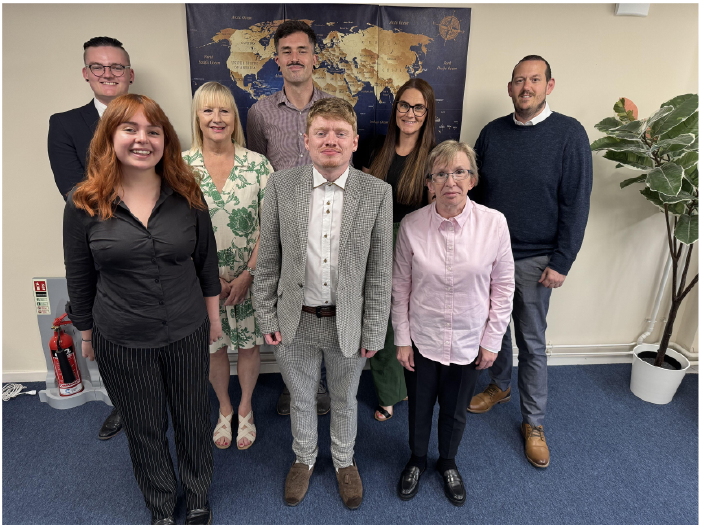
Finally, on a personal note, the legacy I want to leave when I finally retire, which will not be anytime soon, is that our loyal customers will always receive the same level of service from our employees, which will be achieved through effective succession planning. The integrity, identity, values and culture of the company will remain, as the very nature of an EOT means that it will always be there for the benefit of its loyal employees and customers.
This concludes our series of articles, we hope you have enjoyed following Sam’s story.
If you would like any further information on our services, please contact Alice Spencer on 0161 440 8884 or email [email protected]